

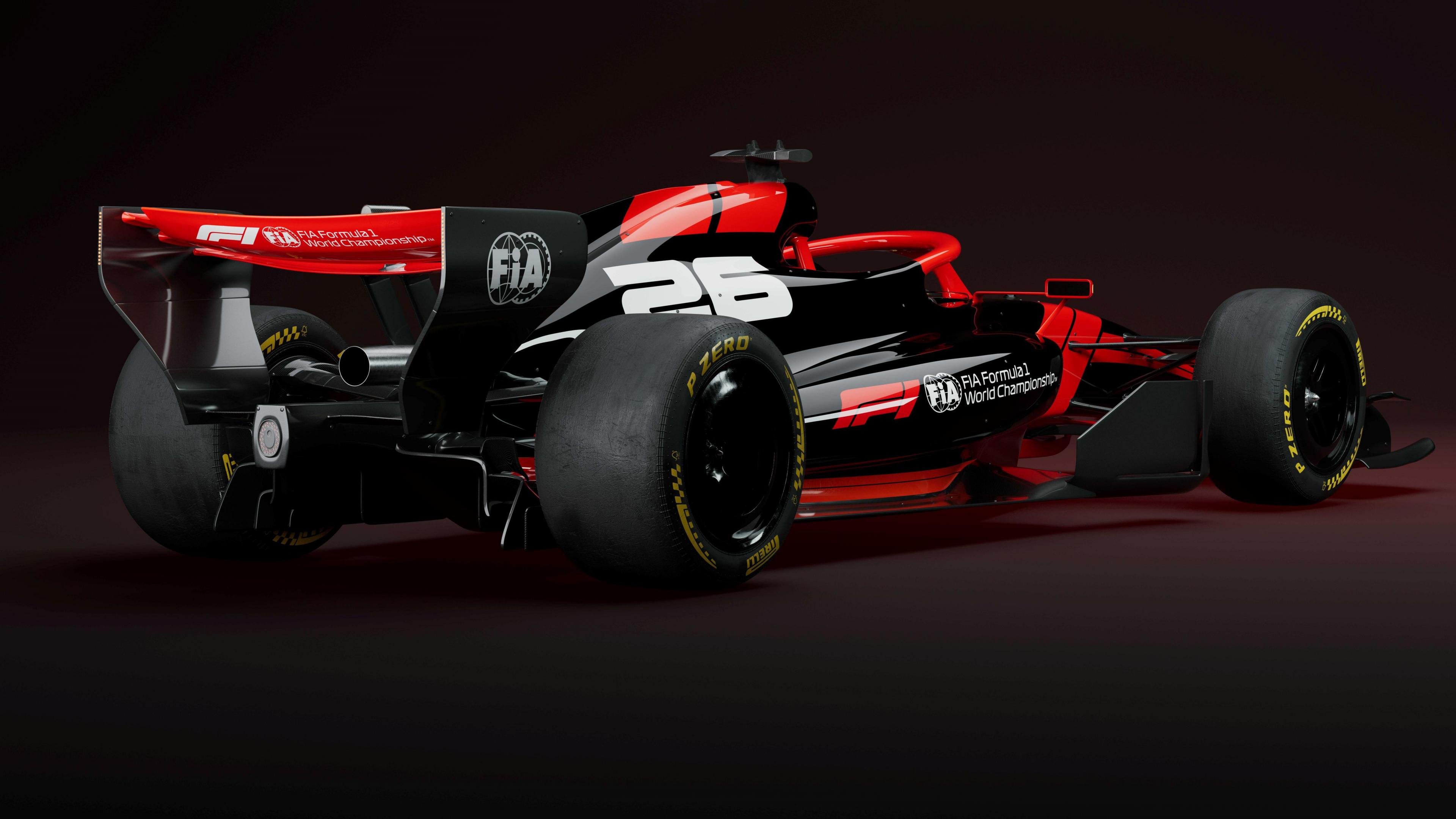
The 2026 cars are designed to be lighter, more agile and sustainable relative to present-day cars.
F1 has introduced the simplified vocabulary that will be used to reference the intricate details of its upcoming 2026 technical rules.
The racing series is implementing what is arguably the biggest regulation change in its illustrious history for the 2026 campaign, featuring revised car and engine specifications and the required adoption of eco-friendly fuels.
The new power units, which keep the hybrid V6 layout, boast a greatly enhanced battery power, requiring key advancements in the cars' aerodynamics.
Throughout races, competitors will tactically deploy electrical energy – including during flying laps – to achieve the best result.
Wide-ranging research were conducted with a wide range of fans, including dedicated enthusiasts and casual observers, to understand which terms would make things clearer of the key features of the new regulations.
The stated goal was to present a series of complex features of the competition as accessible as possible for the widest audience.
Consequently, previous placeholder terms for some systems – such as "alphabetical mode names" for the adjustable aero – have been phased out in favor of descriptive names that clearly indicate the actual function of the technology.
What's the New Technology?
According to rule-makers that drivers will have greater control to determine tactics regarding energy deployment, energy recovery, and efficiency.
The upcoming changes introduce a series of modes that will be clearly indicated on television graphics to improve the audience's understanding of the on-track action.
- Attack Mode: This supersedes the current DRS. It provides a burst of extra electrical energy accessible when a driver is close behind the leading car to execute an overtake.
- Extra Push Mode: This is a driver-operated energy deployment from the energy recovery system that can be used in attack or defence. It delivers the driver full engine and battery energy at the push of a button.
Both of these crucial modes will have to be used with calculation, as the available electrical charge is strictly limited.
- Active Aerodynamics: Both the front and rear wings move automatically – flattening on the high-speed sections for minimal air resistance and top speed, and closing in the turns for optimal cornering performance.
- Battery Recharge: Cars can harvest energy with energy harvested under braking, or during partial power application at the end of straights or in sections where only reduced throttle is required.
What's Changing on the Cars?
The next-generation machines will be reduced in size and weight relative to current models, with a distance between axles shortened by 200mm to 3,400mm, car width reduced by 100mm – down to 1,900mm – and the car weight reduced by 30kg.
Cumulative downforce is expected to drop by approximately a significant margin, although teams will inevitably claw this back as they optimize their packages.
Air resistance has been reduced by 40%. The vehicles will employ adjustable aero systems – both wings will open on the straights to improve speed and increase straightline speed and click back into place for optimal grip in corners.
Tyres will continue to use the current rim size, but the actual tyres will be narrower, by 25mm at the front and 30 millimetres on the rear axle.
What's Changing in the Engines?
The new power units will have an approximate 50-50 split in power produced by the petrol engine and the ERS, up from about 20% electrical under present rules.
The hybrid system is streamlined through the removal of the MGU-H, the sophisticated and pricey unit that recovered energy from the turbocharger.
All vehicles will be obliged to compete on carbon-neutral fuel, manufactured from biomass or synthetic production methods.


